Kolkata Real Estate Development: Why Corridor-Based Growth & New Townships Are the Future of West Bengal
30 May, 2026
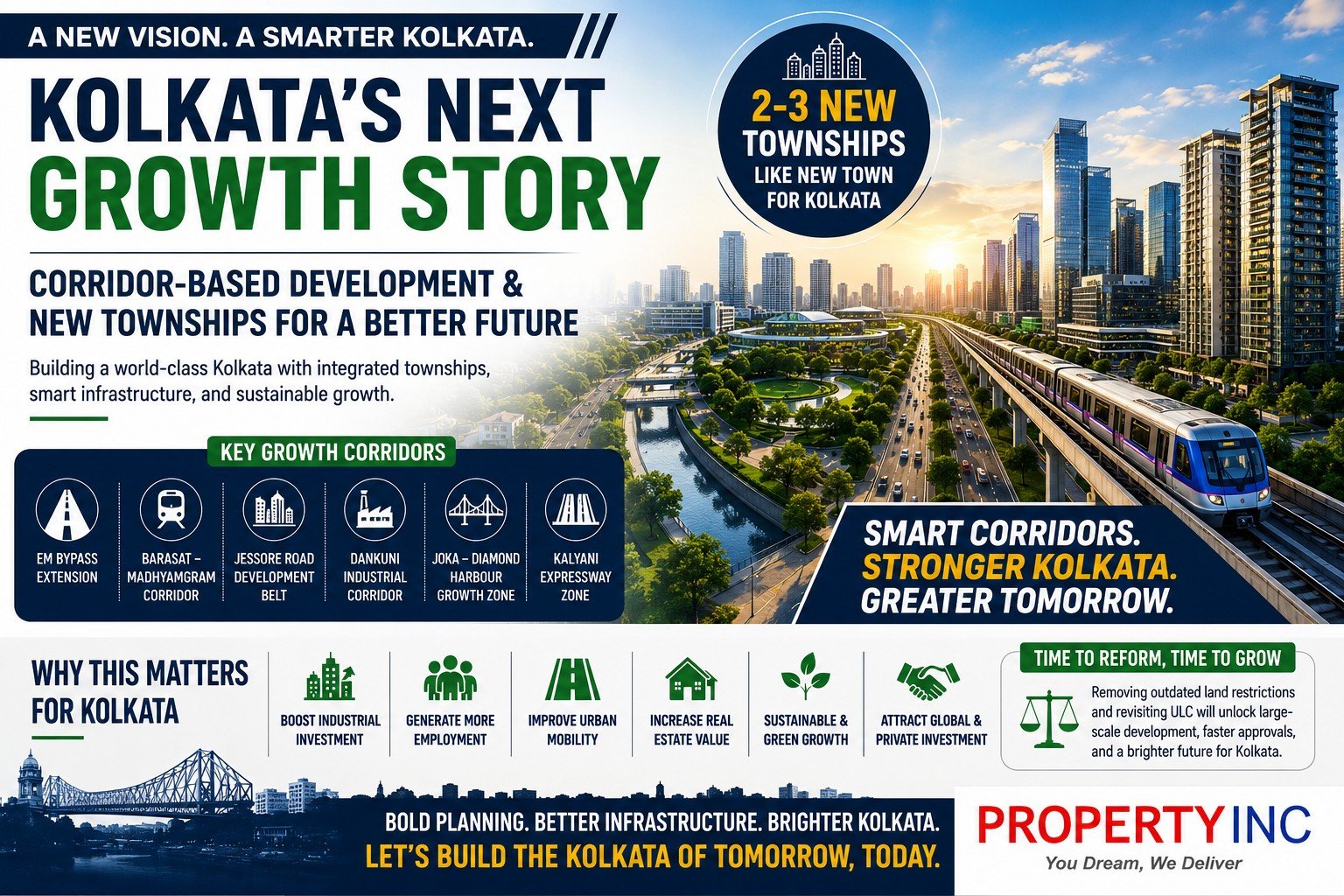
Kolkata Real Estate: 5 Reasons New Townships & Growth Corridors Are the Future
Introduction
Kolkata is at a critical stage of urban transformation. As infrastructure projects, metro expansion, and industrial investments gather momentum, the future of Kolkata Real Estate will increasingly depend on planned urban growth rather than unorganized expansion.
To compete with cities such as Hyderabad, Bengaluru, Ahmedabad, and Pune, Kolkata needs a long-term vision centered around corridor-based development, integrated townships, modern infrastructure, and progressive land policies. The next phase of growth requires the creation of multiple township projects similar to New Town, supported by strategic development corridors that can unlock investment, employment, and sustainable urbanization.
1. Kolkata Needs More Planned Townships
New Town has demonstrated how planned urban development can create a successful ecosystem for residential, commercial, and institutional growth. However, a single township cannot accommodate the future needs of a metropolitan region with millions of residents.
Kolkata requires at least two to three additional large-scale integrated townships featuring:
- Wide road networks
- Smart infrastructure
- IT and business districts
- Residential communities
- Educational institutions
- Healthcare facilities
- Green and open spaces
These developments can help reduce pressure on the city's core areas while creating new growth centers across the metropolitan region.
2. Corridor-Based Development Is the Future
Modern cities grow around infrastructure corridors. Metro networks, highways, logistics hubs, industrial parks, and transit-oriented developments create long-term economic value and attract private investment.
Potential growth corridors around Kolkata include:
- EM Bypass Extension
- Rajarhat–New Town Expansion Belt
- Barasat–Madhyamgram Corridor
- Jessore Road Development Belt
- Dankuni Industrial Corridor
- Joka–Diamond Harbour Growth Zone
- Kalyani Expressway Corridor
These corridors can become major drivers of Kolkata Real Estate growth by connecting residential, commercial, industrial, and logistics developments.
3. Infrastructure Development Will Drive Property Demand
Infrastructure has always been one of the strongest catalysts for real estate appreciation.
Key infrastructure projects such as:
have the potential to significantly increase demand for residential and commercial properties.
Improved connectivity reduces travel time, enhances business opportunities, and creates new investment destinations across Greater Kolkata.
4. Land Reforms Can Unlock Large-Scale Development
Many urban planners and industry experts believe that simplifying land-related regulations and revisiting outdated land restrictions can accelerate development across West Bengal.
A more efficient policy framework could help:
- Fast-track project approvals
- Improve land utilization
- Encourage private investment
- Attract global capital
- Support affordable housing projects
- Promote industrial development
Land availability remains one of the most important factors influencing large-scale township and infrastructure projects.
5. Kolkata Has the Potential to Become Eastern India's Growth Engine
Kolkata possesses several competitive advantages:
- Strategic geographic location
- Major port connectivity
- Skilled workforce
- Growing metro network
- Competitive property prices
- Strong educational ecosystem
With the right planning and execution, Kolkata can emerge as one of India's leading destinations for real estate investment, manufacturing, logistics, technology, and urban development.
The city's affordability compared to other metropolitan regions presents a unique opportunity for both investors and end-users.
The Road Ahead
The future of Kolkata Real Estate cannot rely solely on isolated projects. Sustainable growth requires a coordinated strategy involving infrastructure, townships, industrial corridors, transportation networks, and policy reforms.
Developing multiple New Town-like urban centers and strengthening strategic growth corridors can reshape Kolkata's urban landscape over the next decade.
The opportunity is enormous. The challenge lies in executing a long-term vision that balances economic growth, environmental sustainability, and quality of life.
Conclusion
Kolkata has the potential to become one of India's most dynamic real estate and economic growth centers. The path forward lies in corridor-based development, creation of new integrated townships, infrastructure-led expansion, and progressive land reforms. By developing multiple New Town-like urban centers and unlocking strategic growth corridors, Kolkata can attract investment, generate employment, improve urban mobility, and create sustainable long-term growth. The decisions taken today will determine whether Kolkata merely expands or truly transforms into a world-class metropolitan region for the next generation.